Mixing objective
Separate simple blending from solids suspension, let-down, emulsification, wall movement or other defined duties.
Batch equipment / Custom mixing tank
Separate circulation, suspension, addition, temperature handling and transfer duties before choosing the tank and agitation arrangement.
Volume describes the container. Process duty describes the equipment.
Specify the vessel duty
A useful tank brief distinguishes what happens during charging, mixing, temperature change, waiting and discharge. That prevents a generic vessel description from hiding the real process.
Separate simple blending from solids suspension, let-down, emulsification, wall movement or other defined duties.
Describe viscosity change, foaming, settling, heat sensitivity and the effect of the addition sequence.
Plan drainage, transfer, product recovery and changeover as part of the tank—not an afterthought.
Selection schematic
This independent educational schematic shows one generic jacketed, top-agitated arrangement. Use it to structure questions about the drive, shaft, impeller, baffles and jacket—not to assume what a supplied vessel includes.
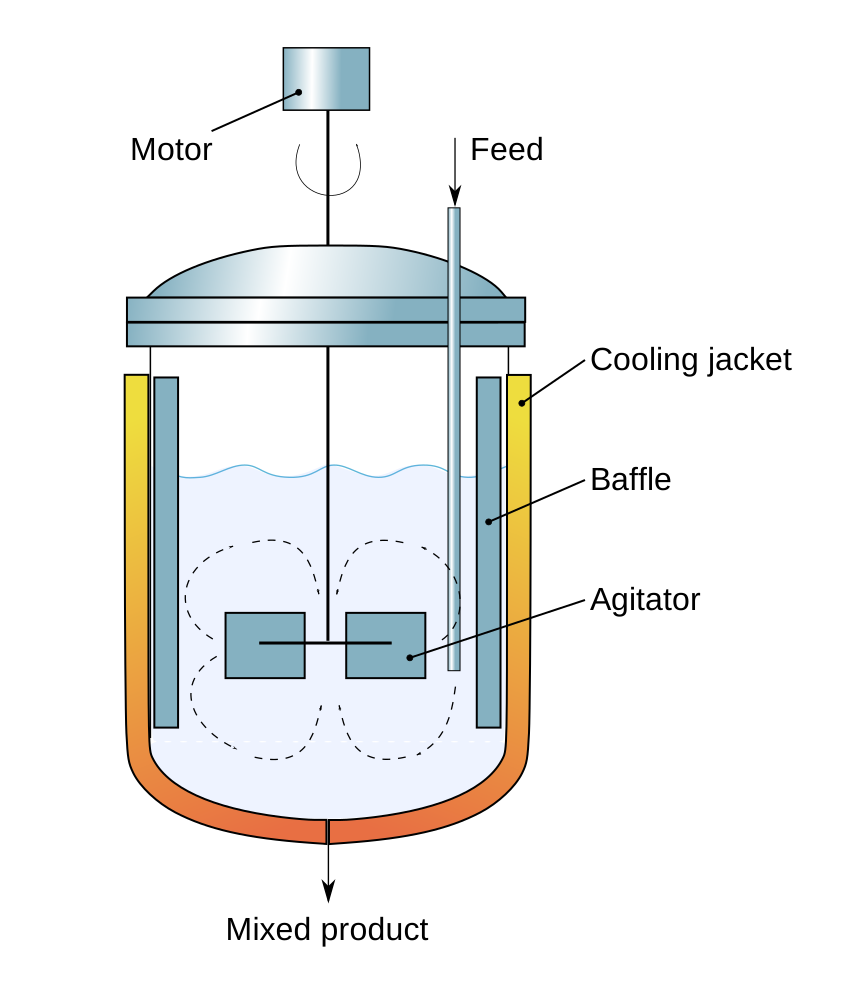
The arrangement is one process-engineering example. It is not JINPIONEER equipment, a supplied model, an engineering drawing, a customer installation or evidence of reactor capability. Actual internals and thermal duty require a defined process brief and supplier confirmation.
Diagram by Daniele Pugliesi via Wikimedia Commons, licensed CC BY-SA 3.0. Source SVG displayed unchanged.
Typical process position
Its place in the line determines whether the priority is charging, dispersion support, final adjustment, holding or transfer.
Define when liquids, powders and minor additions enter the batch.
Match circulation, suspension and shear duties to the material behavior.
Set the endpoint for transfer, filling, filtration or the next unit operation.
Include drainage, recovery and cleaning in the operating route.
Mixing-tank process brief
Tank size matters, but the sequence and material behavior explain what must happen inside it.
Open the RFQ briefBlend, suspend, emulsify, let down, adjust, hold or combine several duties.
Liquid and solids behavior, viscosity change, settling, foaming and heat sensitivity.
Required working quantity, headspace considerations and campaign pattern.
What enters, in which order, over what part of the batch and by which method.
Heating or cooling objective, discharge destination and transfer method.
Changeover method, product recovery, instrumentation and operator workflow.
Equipment questions
The arrangement follows the required duty and material behavior: circulation, blending, suspension, addition, heat transfer support, shear, holding and discharge can call for different approaches.
Not automatically. “Reactor” is a scope-dependent term for a vessel where a controlled reaction occurs. The process conditions and required design basis must be defined before that term accurately describes the equipment.
A batch is not finished when mixing stops. Drainage, recovery, transfer route and changeover method affect vessel geometry, connections and the practical operating sequence.
Include tank purpose, material behavior, working batch, addition sequence, temperature objective, mixing endpoint, transfer destination, cleaning method, controls boundary and available utilities.
Start with your material
